

Women's Health Physiotherapy
Women's health physiotherapy addresses pelvic and abdominal function, pregnancy-related activity, postnatal recovery, continence, pelvic pain, surgical rehabilitation and bone health across life stages.
General subject summary is free to everyone.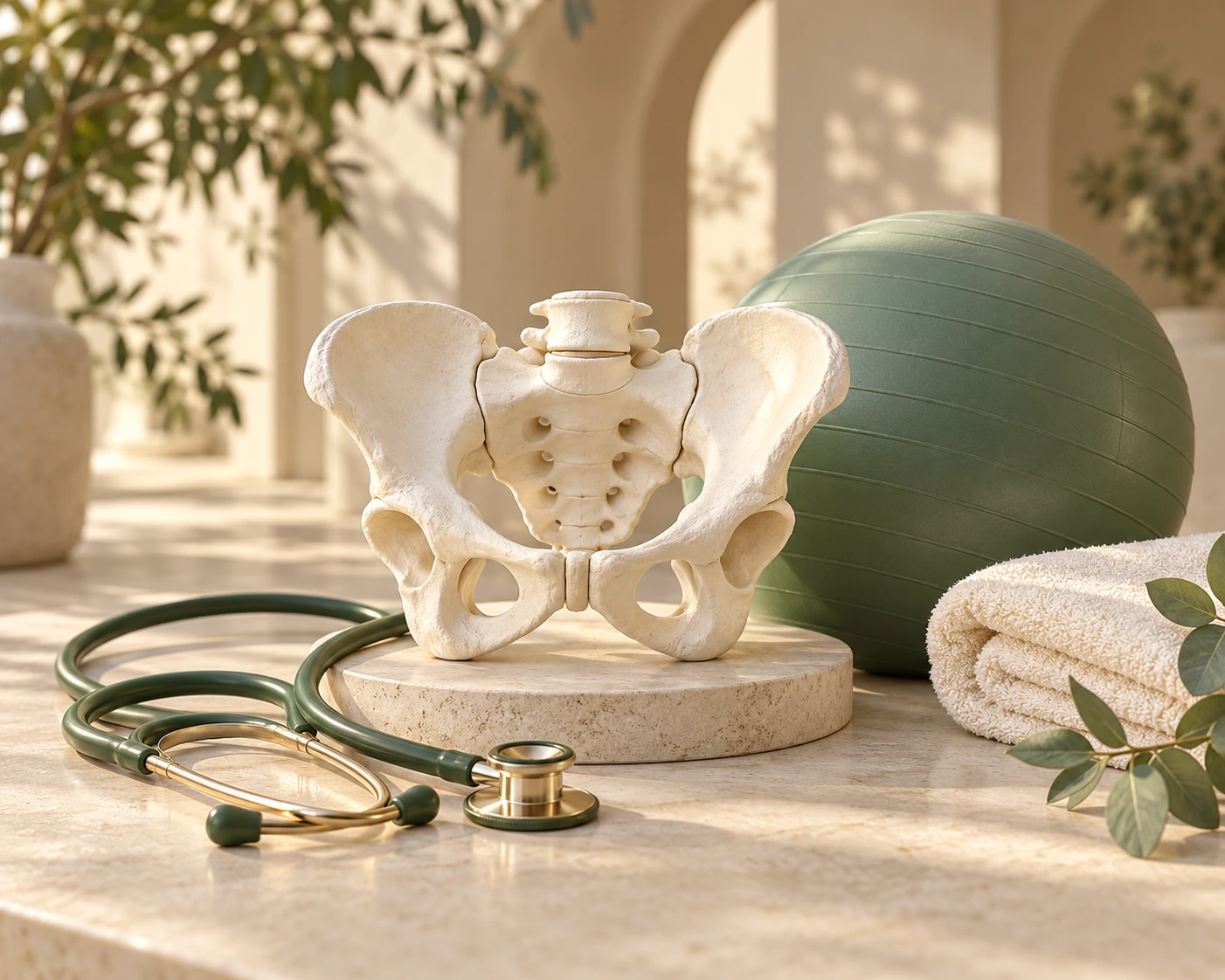
Women's Health Physiotherapy
Subject Summary
The public overview below follows the supplied PhysioVeda Academics subject summary.
Women's health physiotherapy addresses pelvic and abdominal function, pregnancy-related activity, postnatal recovery, continence, pelvic pain, surgical rehabilitation and bone health across life stages.
Effective rehabilitation is individualised to symptoms, physical findings, life circumstances and personal goals; safe care also depends on informed consent and coordination with obstetric, gynaecological and oncology teams.
Common clinical themes are muscle contraction and relaxation, load management, graded exercise, functional independence, bladder and bowel habits, and early recognition of symptoms needing medical review.
All 13 topics and 56 subtopic headings follow the uploaded PhysioVeda Academics outline exactly. The explanations, high-yield figures and references are supplementary educational synthesis, not text quoted from the outline.
Whole-subject high-yield concepts
Use these supplied values and key facts for quick whole-subject revision.
| Item | Key fact / clinical application |
|---|---|
| Pelvic floor function | Support, closure, relaxation and timing all matter; not every problem needs strengthening. |
| Uncomplicated pregnancy exercise | About 150 minutes/week of moderate activity may be an appropriate goal (ACOG). |
| Exercise intensity | Talk test and perceived exertion can guide effort during pregnancy. |
| Pregnancy exercise warning signs | Bleeding, leakage of fluid, chest pain, painful contractions or calf symptoms: stop and obtain assessment. |
| Stress urinary incontinence | Leakage with cough, laugh, exertion or increased intra-abdominal pressure. |
| Urgency urinary incontinence | Leakage associated with an urgent need to void. |
| PFMT for stress/mixed incontinence | Supervised programme for at least 3 months (NICE NG123). |
| Bladder training for urgency | At least 6 weeks as initial conservative care (NICE NG123). |
| Early symptomatic prolapse | Supervised PFMT for at least 16 weeks can be considered (NICE NG123). |
| Diastasis recti | Assess function, tension and symptoms, not gap size alone. |
| Breast cancer rehabilitation | Progressive exercise is usually appropriate with treatment-specific assessment. |
| Menopause and bone | Resistance, appropriate impact and balance training support function and falls prevention. |
Core references
- Primary outline: PhysioVeda Academics. Women's Health Physiotherapy Topics and Subtopics (uploaded source document; supplies headings and order).
- American College of Obstetricians and Gynecologists (ACOG). Physical Activity and Exercise During Pregnancy and the Postpartum Period. Committee Opinion No. 804. Obstet Gynecol. 2020;135:e178-e188.
- National Institute for Health and Care Excellence (NICE). Urinary Incontinence and Pelvic Organ Prolapse in Women: Management. Guideline NG123. 2019 (consult current updates).
- NICE. Pelvic Floor Dysfunction: Prevention and Non-Surgical Management. Guideline NG210. 2021 (consult current updates).
- NICE. Menopause: Identification and Management. Guideline NG23. 2015; updated 2024.
- Davies C, Levenhagen K, Ryans K, Perdomo M, Gilchrist L. Interventions for Breast Cancer-Related Lymphedema: Clinical Practice Guideline from the Academy of Oncologic Physical Therapy of APTA. Phys Ther. 2020;100(7):1163-1179.
- Bo K, Berghmans B, Morkved S, Van Kampen M, eds. Evidence-Based Physical Therapy for the Pelvic Floor: Bridging Science and Clinical Practice. 2nd ed. Elsevier; 2015.
Want to go deeper into Women's Health Physiotherapy?
Continue into the complete topic and subtopic learning system with structured summaries, medical visuals, topic wise OBQ practice, timed tests, explanations and results.