
Pathology
Pathology is the study of the structural, biochemical and functional changes in cells, tissues and organs that underlie disease. It links the cause and mechanism of disease with the resulting morphologic changes and clinical consequences.
General subject summary is free to everyone.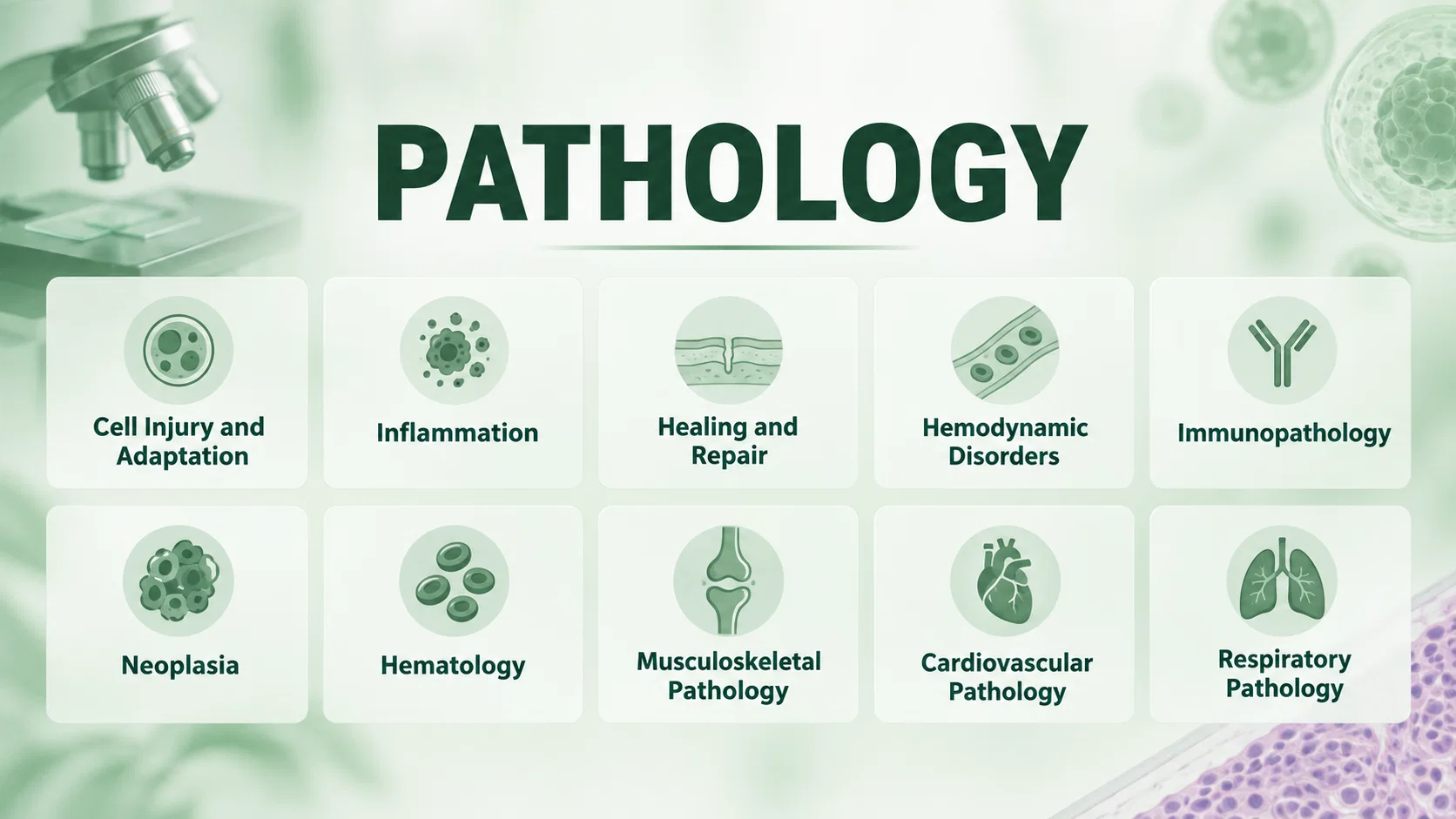
Pathology
Subject Summary
The public overview below follows the supplied PhysioVeda Academics subject summary.
Pathology is the study of the structural, biochemical and functional changes in cells, tissues and organs that underlie disease. It links the cause and mechanism of disease with the resulting morphologic changes and clinical consequences.
General pathology describes recurring mechanisms such as cell injury, inflammation, repair, hemodynamic disturbance, immune injury and neoplasia. Systemic pathology applies these mechanisms to blood, musculoskeletal, cardiovascular, respiratory, nervous and other organ systems.
For physiotherapy and rehabilitation, pathology is clinically relevant because tissue healing, infection, vascular compromise, cardiopulmonary disease, neurological injury, cancer and systemic illness directly influence exercise tolerance, precautions, prognosis and referral decisions.
The emphasis in these summaries is high-yield: definitions, mechanisms, classic patterns, important classifications, clinically useful numbers and the complications most likely to alter rehabilitation or patient safety.
This document follows the uploaded PhysioVeda Academics pathology structure: cell injury and adaptation, inflammation, healing and repair, hemodynamic disorders, immunopathology, neoplasia, hematology, musculoskeletal pathology, cardiovascular pathology, respiratory pathology, neuropathology and other systemic pathology.
Key numbers and exam points to remember
Use these supplied values and key facts for quick whole-subject revision.
| Item | Number / key fact |
|---|---|
| Major cellular adaptations | 4 classic patterns: hypertrophy, hyperplasia, atrophy, metaplasia |
| Cardinal signs of acute inflammation | 5: redness, heat, swelling, pain, loss of function |
| Virchow triad for thrombosis | 3: endothelial injury, abnormal blood flow, hypercoagulability |
| Hypersensitivity reactions | 4 major types: I, II, III and IV |
| Classic routes of malignant spread | 3: lymphatic, hematogenous and transcoelomic/seeding |
| TNM staging | T = primary tumor, N = regional nodes, M = distant metastasis |
| Anemia by MCV | <80 fL microcytic; 80-100 fL normocytic; >100 fL macrocytic |
| Osteoporosis by DXA | T-score ≤ -2.5 at a validated skeletal site |
| Common acute inflammatory cell | Neutrophil predominance early; monocytes/macrophages later |
| Normal arterial blood pH | Approximately 7.35-7.45 |
| Major shock categories | Hypovolemic, cardiogenic, distributive and obstructive |
| Major stroke categories | Ischemic and hemorrhagic |
Core references
- Kumar V, Abbas AK, Aster JC, Debnath J, Das A, eds. Robbins, Cotran & Kumar Pathologic Basis of Disease. 11th ed. Elsevier; 2025.
- Kumar V, Abbas AK, Aster JC, Deyrup AT. Robbins & Kumar Basic Pathology. 11th ed. Elsevier; 2023.
- Mohan H. Textbook of Pathology. 9th ed. Jaypee Brothers Medical Publishers; 2023.
- Strayer DS, Saffitz JE, eds. Rubin's Pathology: Mechanisms of Human Disease. 8th ed. Wolters Kluwer; 2019.
Want to go deeper into Pathology?
Continue into the complete topic and subtopic learning system with structured summaries, medical visuals, topic wise OBQ practice, timed tests, explanations and results.