
Physiology MCQs with Answers and Explanations
Learn how the body and its systems function.
General subject summary is free to everyone.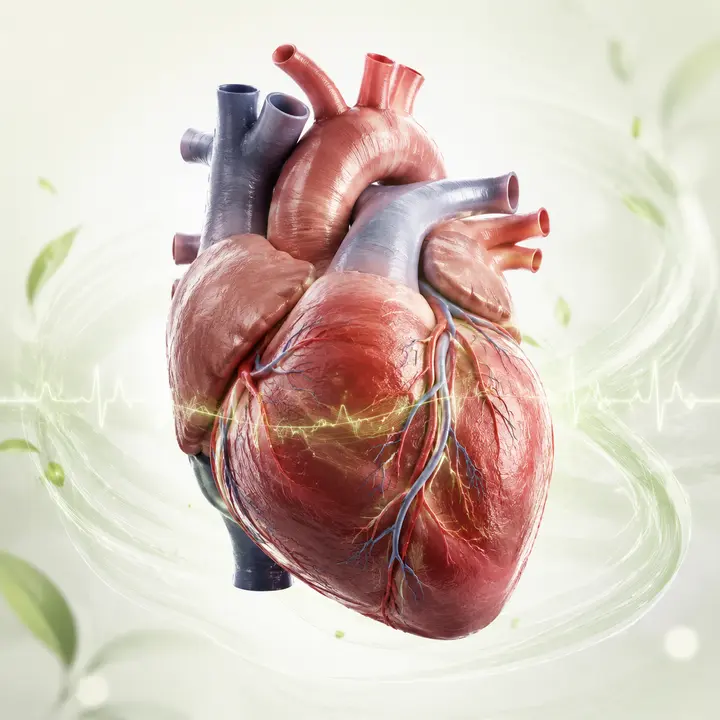
Physiology
Subject Summary
The public overview below follows the supplied PhysioVeda Academics subject summary.
Physiology is the study of how cells, tissues, organs and organ systems function and regulate one another to maintain life and homeostasis.
For physiotherapy, physiology should be learned functionally: what variable is controlled, how it is sensed, which neural/hormonal mechanisms respond, what normal values are expected, and how exercise or disease alters the response.
This document follows the uploaded PhysioVeda Academics physiology structure: General Physiology, Blood, Nerve Physiology, Muscle Physiology, Cardiovascular, Respiratory, Gastrointestinal, Renal, Endocrine, Reproductive, Nervous System, Special Senses and Exercise Physiology.
High-yield numeric values and compact tables are included where they improve revision. Values are intentionally presented as approximate ranges when no single universal value is appropriate.
Whole-subject high-yield numbers
Use these supplied values and key facts for quick whole-subject revision.
| Whole-subject high-yield item | Number / key fact |
|---|---|
| Body fluid compartments | ICF ~2/3 TBW; ECF ~1/3 TBW |
| RBC lifespan | ~120 days |
| Typical neuronal resting membrane potential | ~ -70 mV |
| Resting cardiac output | ~5 L/min |
| Resting tidal volume | ~500 mL |
| GFR | ~120-125 mL/min in a healthy young adult |
| Plasma pH | 7.35-7.45 |
| Semicircular canals | 3 per labyrinth |
| 1 MET | ~3.5 mL O2/kg/min conventional reference |
Core textbook set used throughout
- Hall JE, Hall ME. Guyton and Hall Textbook of Medical Physiology. 15th ed. Elsevier; 2025.
- Barrett KE, Brooks HL, Barman SM, Yuan JX-J. Ganong's Review of Medical Physiology. 27th ed. McGraw Hill; 2025.
- Koeppen BM, Stanton BA. Berne & Levy Physiology. 8th ed. Elsevier; 2023.
- Costanzo LS. Costanzo Physiology. 8th ed. Elsevier; 2026.
- Widmaier EP, Raff H, Strang KT. Vander's Human Physiology. 16th ed., 2026 release. McGraw Hill.
Physiology MCQs with answers and explanations
Try these original educational questions, then open a complete free topic set. Select an answer before revealing the explanation.
1. A worked example gives a heart rate of 75 beats/min and a stroke volume of 80 mL/beat. What is the cardiac output?
- 1.5 L/min
- 6.0 L/min
- 9.4 L/min
- 155 L/min
Show answer and explanation
B. 6.0 L/min
Cardiac output equals heart rate multiplied by stroke volume: 75 × 80 = 6,000 mL/min, or 6.0 L/min. The volume is expressed per minute, rather than per heartbeat.
2. If left ventricular end-diastolic volume is 130 mL and end-systolic volume is 50 mL, what is the stroke volume?
- 50 mL
- 65 mL
- 80 mL
- 180 mL
Show answer and explanation
C. 80 mL
Stroke volume is the amount ejected in one beat. Subtract the volume remaining after contraction from the volume present before contraction: 130 − 50 = 80 mL.
3. Which structure normally initiates the electrical impulse that establishes sinus rhythm?
- Sinoatrial node
- Atrioventricular bundle
- Left bundle branch
- Purkinje fibres
Show answer and explanation
A. Sinoatrial node
The sinoatrial node normally sets the pace because its conducting cells depolarize spontaneously at the highest intrinsic rate. The remaining conduction structures distribute the impulse toward and through the ventricles.
Each complete public topic set includes references and further reading. Send academic feedback.
Want to go deeper into Physiology?
Continue into the complete topic and subtopic learning system with structured summaries, medical visuals, topic-wise MCQ practice, timed tests, explanations and results.