

Neurological Physiotherapy
Neurological physiotherapy assesses and treats impairments in movement, balance, walking and everyday function caused by disorders of the brain, spinal cord, vestibular system and peripheral neuromuscular system.
General subject summary is free to everyone.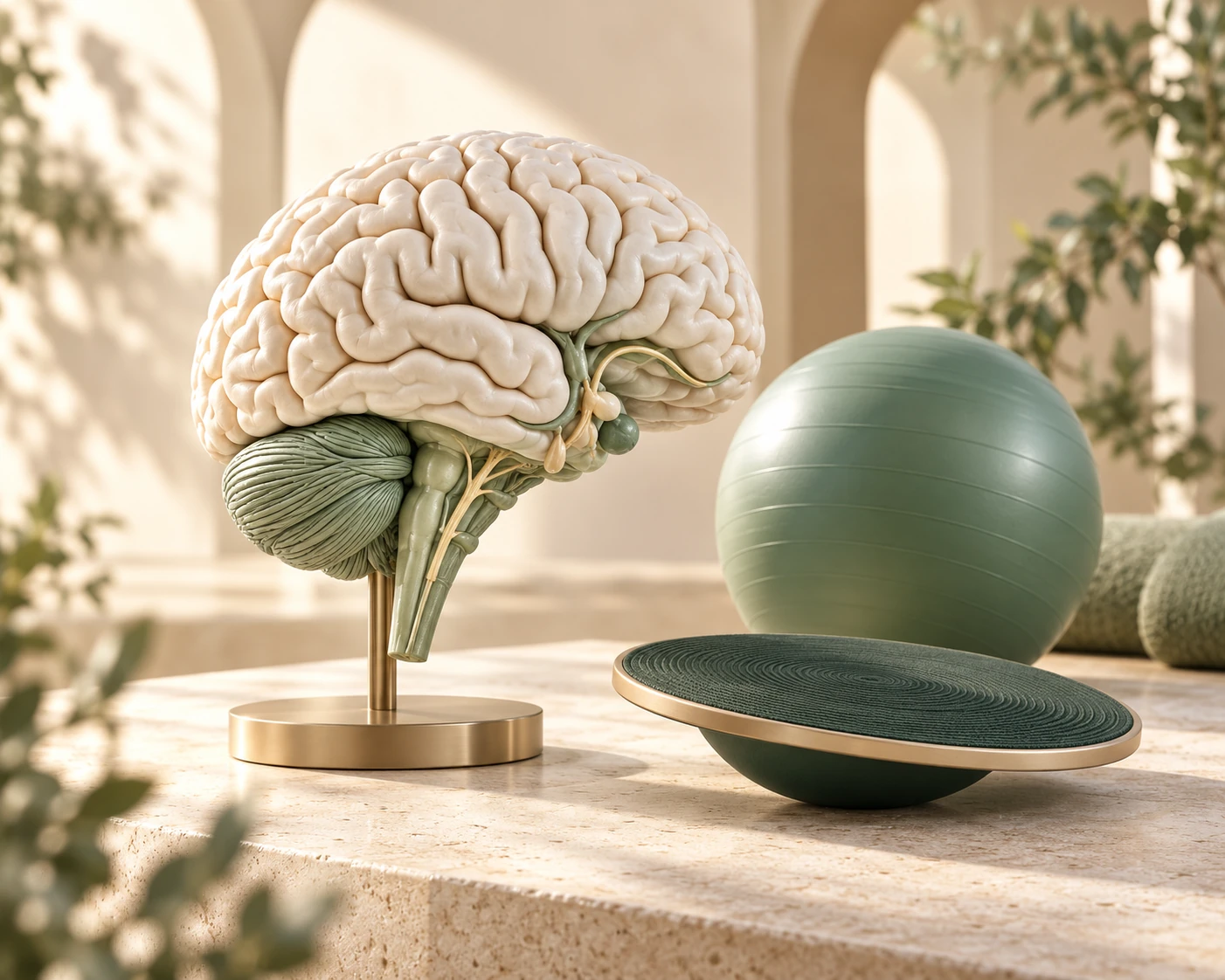
Neurological Physiotherapy
Subject Summary
The public overview below follows the supplied PhysioVeda Academics subject summary.
Neurological physiotherapy assesses and treats impairments in movement, balance, walking and everyday function caused by disorders of the brain, spinal cord, vestibular system and peripheral neuromuscular system.
Treatment combines examination-based clinical reasoning with patient-centered goals, meaningful task practice, motor learning, prevention of secondary complications and management of activity limitations.
Safety depends on recognizing evolving neurological signs, falls risk, autonomic or respiratory problems, joint vulnerability and reduced sensation. Therapy should progress with medical stability, tolerance and functional response.
This summary follows the uploaded PhysioVeda Academics outline exactly: 15 topics and 86 listed subtopics. The explanatory text, numerical reminders, tables and references are additional educational synthesis, not verbatim material in the outline.
Whole-subject high-yield numbers and concepts
Use these supplied values and key facts for quick whole-subject revision.
| Item | Number / key fact |
|---|---|
| MRC muscle strength | 0–5; 0 = no contraction, 3 = movement against gravity, 5 = normal strength. |
| Modified Ashworth Scale | Common categories: 0, 1, 1+, 2, 3, 4; resistance to passive motion, not a direct measure of function. |
| ASIA/ISNCSCI | Standardized SCI sensory and motor examination; AIS classifications A through E. |
| Autonomic dysreflexia | Potential emergency in SCI, commonly injuries at or above T6; sudden hypertension requires assessment. |
| Berg Balance Scale | 14 items rated 0–4, total 0–56; interpretation requires context. |
| Timed Up and Go | Stand, walk 3 m, turn, return and sit; reported in seconds. |
| FIM | 18 items scored 1–7; total 18–126, with instrument-specific training/licensing. |
| 10-meter walk test | Walking speed in meters per second (m/s); use consistent timing protocol. |
| 6-minute walk test | Distance covered in six minutes; standardization and response monitoring are essential. |
| Rehabilitation focus | Meaningful task practice, transfer to real environments, strength/endurance and safe participation. |
Core references
- Umphred DA, Lazaro RT, Roller M, Burton G. Umphred’s Neurological Rehabilitation. Elsevier.
- O’Sullivan SB, Schmitz TJ, Fulk GD. Physical Rehabilitation. F.A. Davis.
- Shumway-Cook A, Woollacott MH. Motor Control: Translating Research into Clinical Practice. Wolters Kluwer.
- American Spinal Injury Association. International Standards for Neurological Classification of Spinal Cord Injury (ISNCSCI).
- American Physical Therapy Association, Academy of Neurologic Physical Therapy. Neurologic physical therapy clinical practice guidelines and outcome-measure resources.
- World Health Organization. International Classification of Functioning, Disability and Health (ICF).
Want to go deeper into Neurological Physiotherapy?
Continue into the complete topic and subtopic learning system with structured summaries, medical visuals, topic wise OBQ practice, timed tests, explanations and results.