

Anatomy
Understand the structure of the human body.
General subject summary is free to everyone.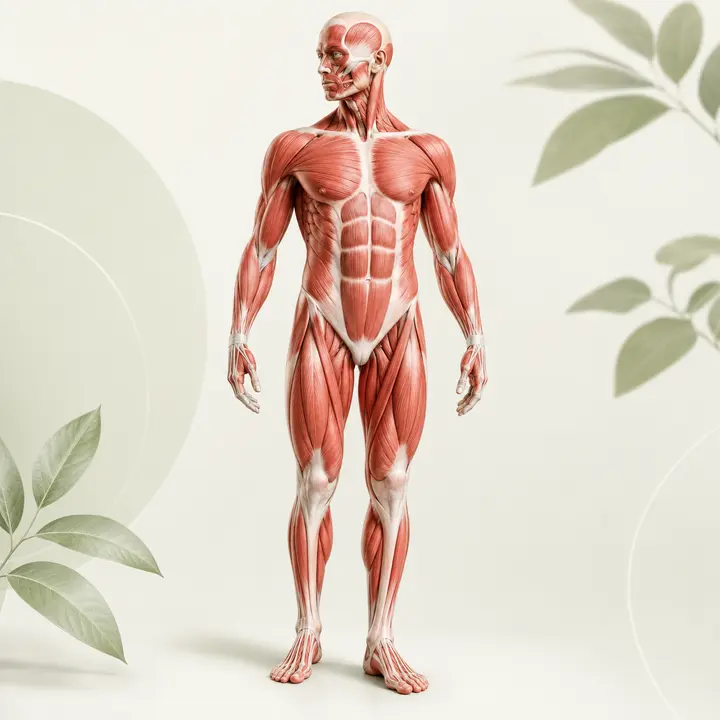
Anatomy
Subject Summary
The public overview below follows the supplied PhysioVeda Academics subject summary.
Anatomy is the study of the structure, organization and relationships of the human body. For physiotherapy, anatomy should be learned as a functional subject: what a structure is, where it is, what supplies it, what movement it produces, and what happens when it is injured.
A typical adult skeleton contains 206 bones: 80 in the axial skeleton and 126 in the appendicular skeleton. Small variations occur because accessory and sesamoid bones are not identical in every person.
The body contains more than 600 skeletal muscles; an exact total varies with the method of counting separate heads, slips and small variable muscles. For examination purposes, muscles are best learned by region and compartment.
There is no single universally accepted total number of human joints because the count changes according to whether small intervertebral, skull, hand and foot articulations are counted separately. This summary therefore gives exact counts where standardized and regional joint groups where a single total would be misleading.
The peripheral nervous system includes 12 pairs of cranial nerves and 31 pairs of spinal nerves (8 cervical, 12 thoracic, 5 lumbar, 5 sacral and 1 coccygeal). These provide the neurological basis for motor, sensory, reflex and autonomic examination.
Regional anatomy is organized here into General Anatomy, Upper Limb, Lower Limb, Thorax, Abdomen, Pelvis and Perineum, Back and Vertebral Column, Head and Neck, Neuroanatomy, and Histology and Embryology.
High-yield tables are included for bone counts, muscle groups, joint classifications, nerve supply and blood supply so that the material can be revised quickly before MCQ practice or examinations.
Whole-body high-yield numbers
Use these supplied values and key facts for quick whole-subject revision.
| Item | Number / key fact |
|---|---|
| Typical adult skeleton | 206 bones |
| Axial skeleton | 80 bones |
| Appendicular skeleton | 126 bones |
| Cranial nerves | 12 pairs |
| Spinal nerves | 31 pairs |
| Basic tissue types | 4 |
| Muscle tissue types | 3 |
| Cartilage types | 3 |
| Skeletal muscles | More than 600; exact total varies |
Want to go deeper into Anatomy?
Continue into the complete topic and subtopic learning system with structured summaries, medical visuals, topic wise OBQ practice, timed tests, explanations and results.