
ENT – Otorhinolaryngology
Otorhinolaryngology concerns hearing, balance, breathing, voice, swallowing, ear and sinus disease, and conditions of the head and neck. Clinical assessment relies on symptom duration, laterality, focused examination and timely recognition of airway, neurological, infectious and cancer-related warning signs. This educational summary follows the supplied outline; explanatory material and revision aids are added for study, not as patient-specific treatment instructions.
General subject summary is free to everyone.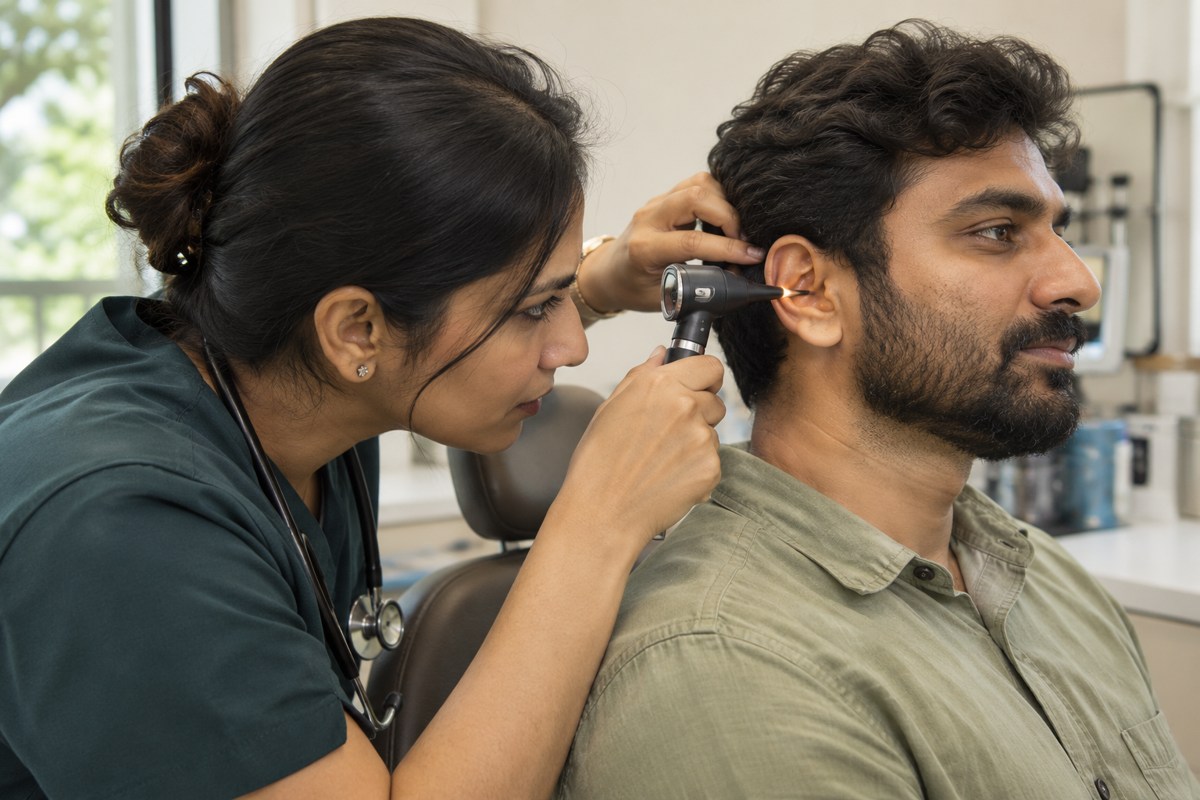
ENT – Otorhinolaryngology
Subject Summary
The public overview below follows the supplied PhysioVeda Academics subject summary.
Otorhinolaryngology concerns hearing, balance, breathing, voice, swallowing, ear and sinus disease, and conditions of the head and neck. Clinical assessment relies on symptom duration, laterality, focused examination and timely recognition of airway, neurological, infectious and cancer-related warning signs. This educational summary follows the supplied outline; explanatory material and revision aids are added for study, not as patient-specific treatment instructions.
Whole-subject high-yield concepts
Use these supplied values and key facts for quick whole-subject revision.
| Concept | High-yield point |
|---|---|
| Sudden hearing loss | Potential sensorineural loss: urgent ENT assessment even when the ear canal and tympanic membrane look normal. |
| Threatened upper airway | Stridor, drooling, respiratory distress or rapidly expanding neck swelling warrants emergency airway help. |
| Epistaxis first aid | Sit forward; pinch the soft part of the nose continuously for 10–15 minutes; reassess and escalate if severe. |
| Chronic rhinosinusitis | Symptoms generally persist at least 12 weeks, with objective clinical or imaging/endoscopic evidence. |
| Suspicious head-and-neck symptoms | Persistent unexplained hoarseness, dysphagia, unilateral symptoms or an adult neck mass merit timely assessment. |
| Dysphagia and aspiration | Airway aspiration may be silent; trained swallowing evaluation and multidisciplinary plans reduce risk. |
| Children and foreign bodies | Nasal/ear button batteries and airway foreign bodies can require immediate emergency removal. |
| Diagnostic integration | History, otoscopy, audiometry, endoscopy and imaging answer different clinical questions; findings require correlation. |
Core references
- • Cummings Otolaryngology: Head and Neck Surgery — foundational ENT anatomy, investigations and specialty care.
- • Scott-Brown’s Otorhinolaryngology and Head and Neck Surgery — clinical otology, rhinology, laryngology and head-and-neck disorders.
- • World Health Organization — World Report on Hearing; resources on ear and hearing care.
- • NICE clinical guidance — hearing loss, acute otitis media, sinusitis, sore throat, tinnitus and suspected cancer referral.
- • American Academy of Otolaryngology–Head and Neck Surgery Foundation — clinical practice guidelines on sudden hearing loss, nosebleed, BPPV and other ENT conditions.
- • Relevant local emergency, infection-control, antimicrobial and referral protocols take precedence for clinical practice.
- Educational note: This document supports undergraduate revision. Procedures, drug choices and time-critical pathways require clinician supervision and the applicable local protocol.
Want to go deeper into ENT – Otorhinolaryngology?
Continue into the complete topic and subtopic learning system with structured summaries, medical visuals, topic-wise MCQ practice, timed tests, explanations and results.