
Dental Anesthesia and Pain Control
Dental anesthesia and pain control through the supplied 32-topic PhysioVeda Academics outline.
General subject summary is free to everyone.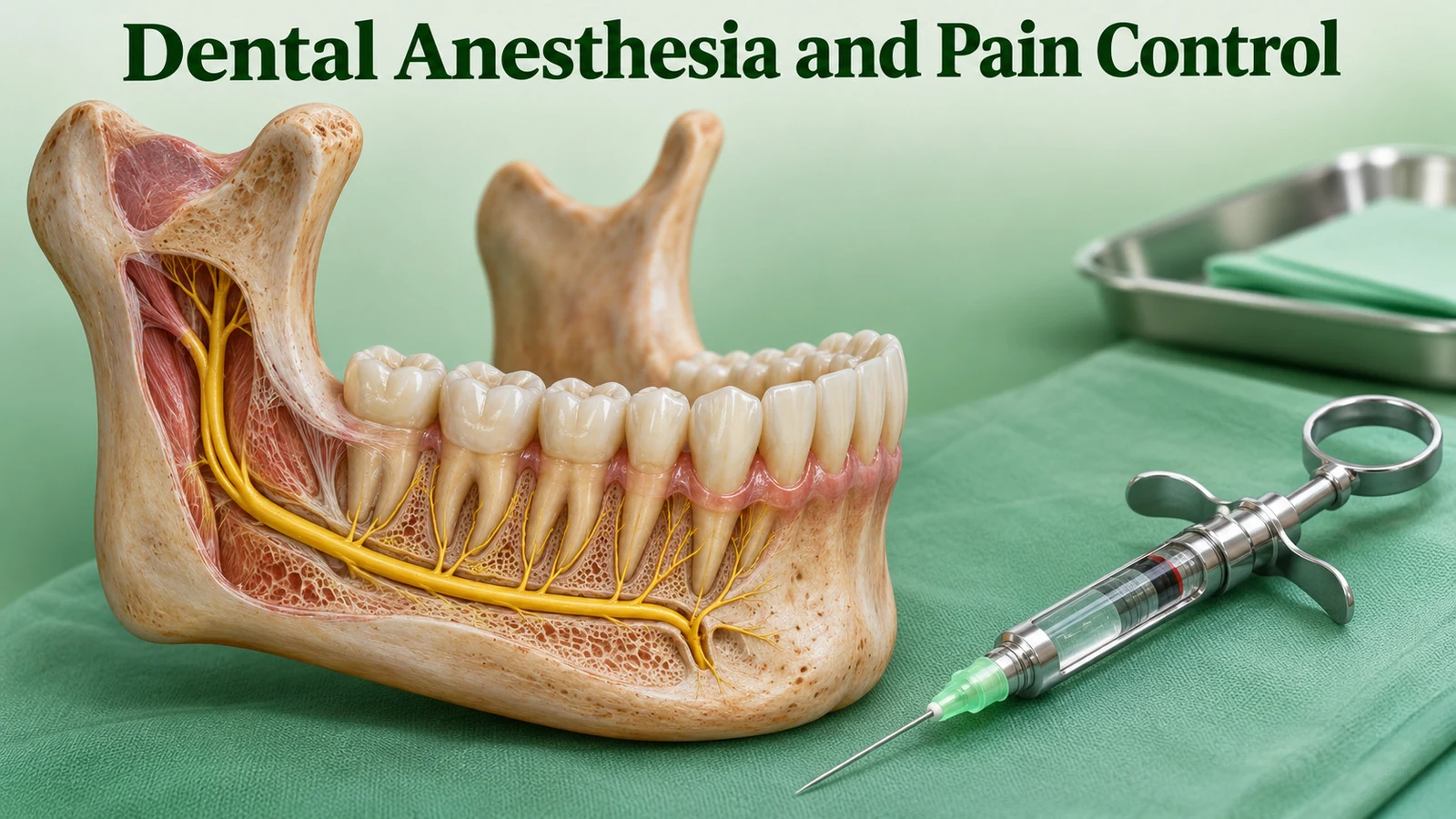
Dental Anesthesia and Pain Control
Subject Summary
The public overview below follows the supplied PhysioVeda Academics subject summary.
Subject explanation. Dental pain may arise from exposed dentin, inflammation or infection of the pulp and periapical tissues, periodontal disease, mucosal injury, or nonodontogenic structures such as the temporomandibular muscles. Procedural pain results from otherwise necessary examination or treatment and can be anticipated. Acute pain is usually linked to a recent insult; persistent pain may involve peripheral or central sensitization and needs a broader assessment. Anxiety, previous experiences, and expectations influence the perceived intensity of pain. Effective care aims to prevent unnecessary pain, permit safe procedures, and support patient trust.
This educational summary follows the exact 32-topic, 192-subtopic outline supplied by PhysioVeda Academics and expands it with standard dental anesthesia principles and practical safety considerations. Exact doses, injection procedures, sedation privileges, monitoring requirements and emergency treatments must follow current local protocols, product information and supervised professional training. The example concentration calculations are arithmetic illustrations, not individualized prescriptions.
Core references
- 1. American Academy of Pediatric Dentistry. Use of Local Anesthesia for Pediatric Dental Patients. Reference Manual of Pediatric Dentistry, 2025, pp. 407-414. https://www.aapd.org/research/oral-health-policies--recommendations/use-of-local-anesthesia-for-pediatric-dental-patients/
- 2. American Dental Association. Acute Dental Pain Management Guideline (adults, adolescents and children). https://www.ada.org/resources/research/science/evidence-based-dental-research/pain-management-guideline
- 3. American Academy of Pediatrics / American Academy of Pediatric Dentistry. Guidelines for Monitoring and Management of Pediatric Patients Before, During, and After Sedation for Diagnostic and Therapeutic Procedures; reaffirmed 2025. https://www.aapd.org/research/oral-health-policies--recommendations/monitoring-and-management-of-pediatric-patients-before-during-and-after-sedation-for-diagnostic-and-therapeutic-procedures/
- 4. American Society of Regional Anesthesia and Pain Medicine. Checklist for Treatment of Local Anesthetic Systemic Toxicity (LAST), 2020. https://asra.com/news-publications/asra-updates/blog-landing/guidelines/2020/11/01/checklist-for-treatment-of-local-anesthetic-systemic-toxicity
- 5. Malamed SF. Handbook of Local Anesthesia. Standard dental anesthesia textbook; consult an up-to-date edition for procedural illustrations and dose tables.
Want to go deeper into Dental Anesthesia and Pain Control?
Continue into the complete topic and subtopic learning system with structured summaries, medical visuals, topic-wise MCQ practice, timed tests, explanations and results.