
Medical Learning Platform: Choose Features and Build a Weekly Routine
Match study features to a real learning goal, then use two worked weekly routines and a reusable worksheet to plan your next topic.

Choose a medical learning platform by testing the work you need to do this week. Use the decision table to match features to your goal, then adapt a worked routine and copy the worksheet for your next study session.
What you’ll practise
- Choose a platform by trying one complete learning task on your device.
- Use summaries, questions and visuals for a specific purpose in each study session.
- Record the reason for each mistake and plan when to revisit the topic.
Choose a medical learning platform around your study task
A medical learning platform is most useful when it helps you complete a specific task, such as understanding a difficult topic, testing recall or revisiting an earlier mistake. Before comparing features, write one sentence describing what you need to do this week. For example, a student might want to explain upper-limb movements before a practical class. A working professional might want to revisit a foundation topic in several short sessions.
Open one relevant topic and follow it from explanation to practice to feedback. Check whether you can find the material, understand the explanation and decide what to study next. That small trial tells you more about everyday usefulness than a long feature list.
| Your learning task | Feature to try | What to check yourself |
|---|---|---|
| Get an overview of an unfamiliar topic | A structured summary with headings and sources | Can you explain the main idea in your own words after reading? |
| Find a gap in recall | Questions with answers and explanations | Does the feedback explain the principle behind an error? |
| Understand a spatial relationship | A labelled visual or interactive anatomy model | Can you identify the structure from another view? |
| Practise working within a time limit | A timed question set | Can you review reasoning errors as well as your score? |
| Plan a return visit | Learning results plus your own study log | Can you name the exact topic and the next action? |
For a first visit to PhysioVeda Academics, browse the subject library, read a public overview and try the sample demo. Use those steps to check how the content fits your current course and learning level.

Turn question feedback into a next action
A score is a starting point for a decision. If you answer six of ten questions correctly, look at why each of the other four went wrong. An unfamiliar term needs a definition. A confused relationship needs a diagram or explanation. A rushed answer needs a slower second attempt. Write the correction as an action you can finish in your next session.
The Institute of Education Sciences practice guide recommends spreading learning over time, using quizzes to revisit important content and using questions to identify material needing further study. The routines below apply those general principles as practical examples. Their session lengths and return dates are adjustable planning choices. Read the IES study and instruction practice guide.
Keep a short record of your reasoning before opening an answer. After reading the explanation, explain the idea again with the page closed. On a later visit, use a fresh example or a different question where possible. Recognising an answer you have just seen gives you less information about what you can explain independently.
Worked routine for a student with four study sessions
Example goal — prepare to describe upper-limb structures and movements before a class. Begin with your course objectives and the Anatomy subject overview. The question numbers below are manageable practice targets you can adjust to the material available to you.
| Session | Time | Work to complete | Record before finishing |
|---|---|---|---|
| Monday | 30 minutes | Read one focused summary. Close it and sketch the main structures with labels. | Two labels or relationships to revisit |
| Wednesday | 30 minutes | Attempt ten relevant questions. Explain each answer before checking feedback. | The reason for each mistake |
| Friday | 20 minutes | Use a visual or the 3D lab, if your access includes it, to revisit the confusing relationships. | A corrected sketch or a short explanation |
| Sunday | 25 minutes | Recall the topic first, then attempt another short set and review the remaining gaps. | The next topic and one return date |
If the same relationship remains unclear on Sunday, make it the first task of the following week. A smaller amount of completed, explained work gives you a clearer study record than moving through several topics without checking understanding.
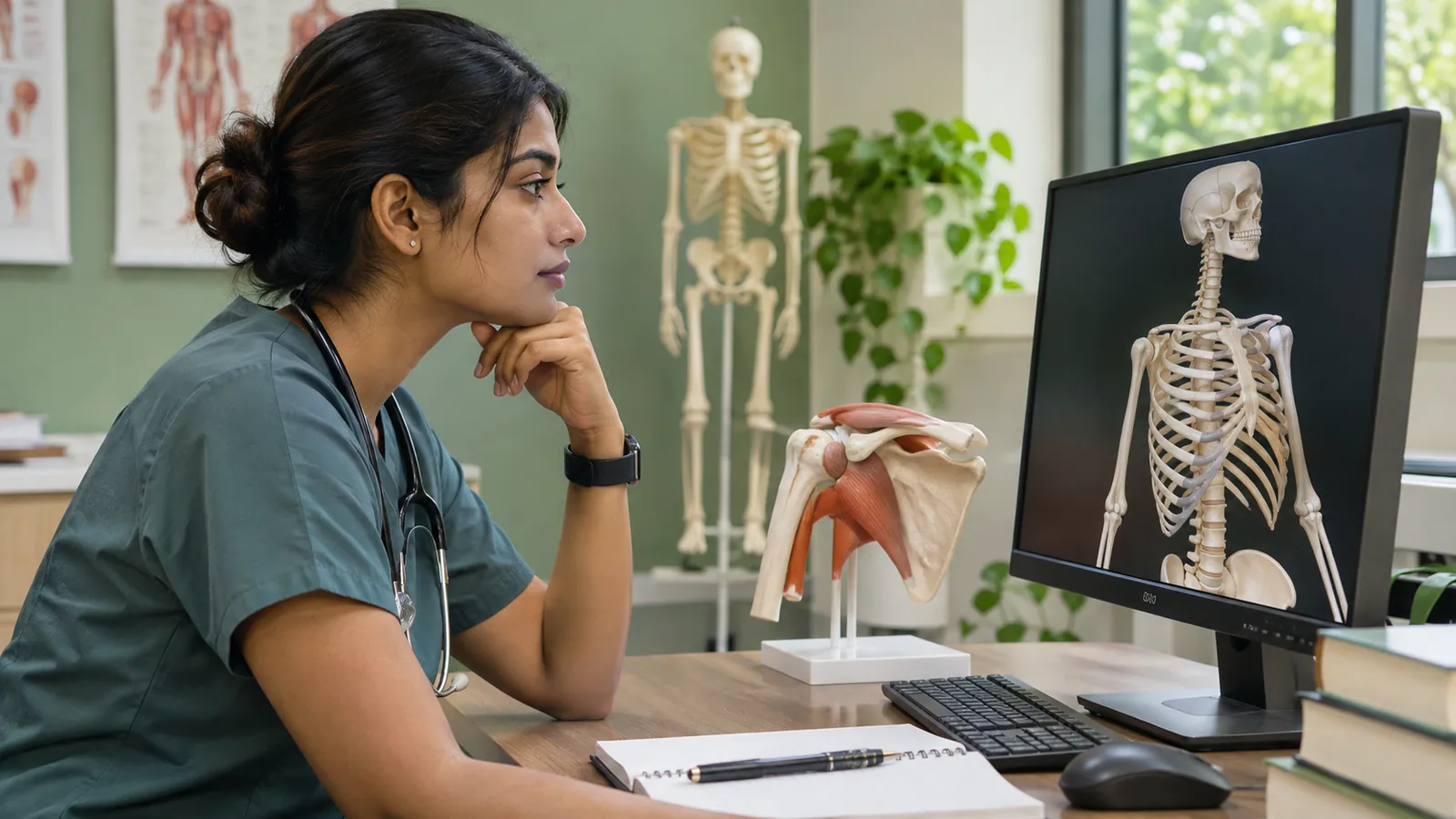
Worked routine for a professional with short learning breaks
Example goal — revisit a physiology foundation during three short breaks in a busy week. Choose a defined section from the Physiology overview and connect your reading to a question you want to explain.
- First break, 15 minutes. Read the chosen section and write a three-sentence explanation without looking back.
- Second break, 15 minutes. Attempt five relevant questions, then use the explanations to correct your notes.
- Third break, 15 minutes. Reconstruct the explanation from memory and add one example showing the relationship you studied.
Finish by recording what remains uncertain and choosing a return date. Keep workplace or patient identifiers out of personal learning notes. For practice questions relevant to movement and rehabilitation study, explore the physiotherapy MCQ hub.
Copy this reusable study worksheet
Copy the blank row into your notebook or spreadsheet for each session. Use the example to keep the task precise. A helpful next action describes work you can do, such as redrawing a relationship or explaining a principle aloud.
| Field | Worked example | Your entry |
|---|---|---|
| Topic and goal | Upper limb — explain a movement using the relevant structures | ________ |
| Starting task | Read the chosen section and draw a simple labelled sketch | ________ |
| Practice completed | Ten questions, with reasons written before checking | ________ |
| Gap found | I confused two relationships in the sketch | ________ |
| Next action | Redraw and explain both relationships with the notes closed | ________ |
| Return date | Friday, then the following week if still uncertain | ________ |
For more ways to organise a compact written explanation, use the worked subject summary sheets. Bring the same worksheet back to your next session so that earlier gaps remain visible.

Check the access option before enrolling
PhysioVeda Full Access includes available subjects, topic summaries, question practice, timed tests and the interactive 3D Anatomy Lab. At the time of this check, monthly access is US$33, six months is US$141 and one year is US$222. The seven-day trial costs US$1 and requires a card. It renews at US$33 per month from day eight unless cancelled before the trial ends. Cancelling during the trial ends trial access immediately.
Read the live plans and access details and membership terms before paying. Start with a single learning task and use the access period to judge how consistently the platform supports it.
Editorial and sources · Prepared by the PhysioVeda Academics Editorial Team. Platform links and access details were checked on 18 November 2026. The study routines and worksheet are original planning examples informed by the IES practice guide. They are adjustable examples rather than a validated exam programme.
Frequently asked questions
What should I check before choosing a medical learning platform?
Try a complete task on your own device. Find a topic, read an explanation, attempt relevant questions and use the feedback to choose a next action. Check that the subject coverage and learning level fit your course.
How do I use summaries and MCQs in the same session?
Choose a small topic, study its summary and close the page before explaining the idea yourself. Attempt relevant questions, review the explanations and record the reason for each error so that your next visit has a clear purpose.
How much time should I spend on each topic?
Choose a session length you can repeat and a task you can finish within it. The worked routines use 15 to 30 minute sessions as examples. Adjust the time and number of questions to your course objectives and the gaps you find.
Does seeing a higher practice score mean I have mastered the topic?
Use the score alongside your reasoning. Check whether you can explain the principle with the notes closed and apply it to a fresh example later. Repeating a recently seen answer alone gives limited information about independent recall.
What can I try before paying for PhysioVeda Academics?
You can browse the subject library, read public subject overviews and try the sample demo. Full Access provides the available paid study and practice features described on the pricing page.
What happens after the seven-day Full Access trial?
The trial costs US$1 and requires a credit or debit card. It renews at US$33 per month from day eight unless you cancel before it ends. Trial cancellation ends access immediately. Check the current pricing page and membership terms before enrolling.
Choose your next learning task
Browse subjects or try the free demo. For the available paid learning features, View Plans & Enroll and check the access terms.